


Introduction: Two Countries, One Unforgettable Road Trip
Rwanda and Uganda sit side by side in East Africa, and together they offer some of the continent’s most rewarding road journeys. In one trip you can trek mountain gorillas, watch tree-climbing lions, cruise past crater lakes and cross the equator, all from behind your own steering wheel.
Self-driving through both countries is absolutely doable, and a growing number of travelers choose it for the freedom it brings. But the two countries are not identical on the road. They drive on opposite sides, have different traffic cultures and ask for different paperwork. This guide walks through what to expect so you can plan with confidence.
The Biggest Difference: Which Side of the Road?
This is the first thing to understand. Rwanda drives on the right. Uganda drives on the left.
Uganda inherited left-hand traffic from its British colonial history, while Rwanda follows the right-hand convention common in francophone Africa. If you cross the border, you switch sides, and the switch is more demanding than it sounds.
A few practical points:
- Vehicles registered in Rwanda are typically left-hand drive, built for right-side traffic. Driving one on Ugandan roads means sitting on the “wrong” side relative to the traffic flow, which affects overtaking visibility.
- Take the first hour in the new country slowly. Roundabouts, junctions and turning across traffic are where drivers most often slip back into old habits.
- If you are not comfortable switching, consider driving only in one country and using a driver or public transport for the other.
Self Driving in Rwanda and Uganda a Good Idea in Each Country?
Rwanda
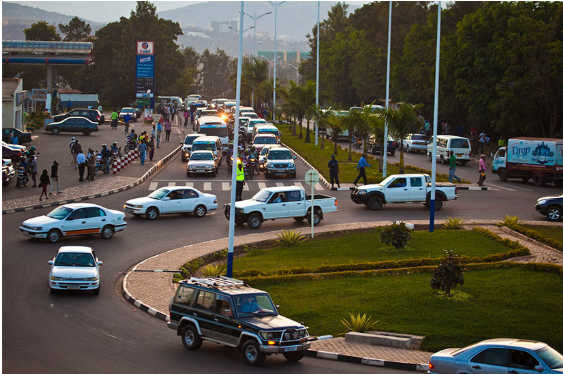
Rwanda has a reputation for orderly roads. Main routes are well surfaced, signage is clear, and traffic enforcement is visible, including speed cameras and police checks. Kigali’s streets are tidy, and driving between major towns is generally straightforward. The main challenges are the steep hills, sharp bends, motorbike taxis and pedestrians near towns.
Uganda
Uganda is a bigger and busier driving experience. Kampala’s traffic can be heavy and chaotic, with boda-boda motorbike taxis weaving between vehicles and minibus taxis stopping without warning. Outside the capital the driving becomes calmer and the scenery spectacular, but you will meet potholes, heavy trucks on the main highways and variable road quality on routes to remote national parks.
An honest summary: Rwanda is the easier country for a first-time self-driver, while Uganda rewards confident, patient drivers who are comfortable with unpredictable traffic.
Documents You Need to Self-Drive
Requirements can change, so confirm the latest rules with your rental company and the relevant authorities before departure. In general, plan to carry:
- Passport and the correct visa or entry authorization for each country.
- Valid driving licence from your home country, ideally in English or with a certified translation.
- International Driving Permit (IDP), which is strongly recommended and sometimes requested by rental companies or police.
- Rental agreement and vehicle registration documents, kept in the car at all times.
- Proof of insurance, including any cross-border cover.
- Credit card for the security deposit.
Many visitors can drive on a foreign licence for a limited period in each country, but the permitted duration and conditions differ. If you plan a long stay, check whether you need to convert or validate your licence locally.
Crossing the Border by Car
Crossing between Rwanda and Uganda in a rental vehicle is where many self-drive plans succeed or fail. The most commonly used route links Kigali to Kampala through the Gatuna (Katuna) border post.
Before you even book, understand these essentials:
- Written permission from the rental company. Many companies do not allow their vehicles to leave the country. Those that do will issue a cross-border authorization letter, often for an extra fee.
- Vehicle paperwork. You will normally need the logbook or ownership documents, the rental agreement and the authorization letter.
- Insurance valid in both countries. Standard local insurance may not apply abroad. Ask about regional cover such as COMESA-type third-party insurance and confirm it in writing.
- Temporary import procedures. Customs will record the vehicle entering and leaving. Keep every stamped document and hand back or retain them exactly as instructed.
- Time buffer. Border processing can be quick or slow depending on the day, so avoid scheduling tight deadlines on the same day.
A simpler alternative is a one-way or “drop-off” arrangement, or renting separately in each country. Some travelers drive in Rwanda, cross the border by shuttle or bus, and pick up a second rental in Uganda. This avoids the left-hand and right-hand drive mismatch and most of the paperwork, though it costs more in logistics.
Choosing the Right Vehicle
Your vehicle matters more than almost any other planning decision.
- Compact SUV (such as a RAV4 type): Good for Kigali, Kampala and main highways. Economical and easy to park.
- Mid-size 4×4 (such as a Prado type): The best all-rounder for mixed itineraries, including park roads and rural lodges.
- Full-size safari 4×4 (Land Cruiser type): Ideal for rough tracks, groups and wildlife drives, especially in Akagera, Murchison Falls and Queen Elizabeth.
- Pickup double cab: Practical for luggage-heavy or camping trips.
High ground clearance and good tyres are worth paying for. If your route includes gorilla trekking areas or national parks in the rainy season, a 4×4 is strongly recommended rather than optional.
Suggested Self-Drive Routes
Kigali to Musanze (Volcanoes National Park). A scenic, mostly paved drive that serves as an easy introduction to Rwandan roads.
Kigali to Akagera National Park. A straightforward approach road, followed by unpaved park tracks that suit a 4×4.
Kigali to Kampala via Gatuna. The classic cross-border corridor, passing rolling farmland and lively roadside towns. Expect heavy truck traffic on the Ugandan side.
Kampala to Bwindi Impenetrable Forest. A long and rewarding journey, usually split over two days through Mbarara or Kabale. The final stretches can be steep and rough, so a sturdy vehicle helps.
Kampala to Queen Elizabeth National Park. Wide landscapes, savanna wildlife and the equator crossing make this a favorite.
Kampala to Murchison Falls National Park. Longer and more remote, with park tracks that reward high-clearance vehicles.
Build in more time than navigation apps suggest. Average speeds in both countries are lower than distance alone implies because of hills, villages, trucks and road works.
Safety Tips for Self-Driving in Both Countries
- Avoid driving after dark. Poor visibility, unlit vehicles, pedestrians and animals make night driving the biggest single risk, particularly in Uganda.
- Expect motorbikes everywhere. Boda-bodas and moto-taxis stop, turn and overtake unpredictably. Keep a generous following distance.
- Watch for speed enforcement. Both countries have speed limits, with lower limits through towns and trading centers. Slow down at signs, because enforcement is real.
- Slow down for speed bumps. They appear without much warning in villages and near schools.
- Keep doors locked and valuables out of sight in cities, as you would anywhere.
- Fuel up early. Top up in larger towns before heading to remote areas, and avoid letting the tank fall below a quarter.
- Download offline maps and carry a power bank, since mobile coverage can fade in forests and valleys.
- Carry a basic emergency kit, including water, a torch, a first-aid kit, a spare tyre and a jack you have checked actually work.
- Know your emergency contacts, including your rental company’s breakdown number and your embassy details.
Seasons and Road Conditions
Both countries share a similar rhythm of two rainy and two drier seasons. The long rains typically arrive from around March to May, with shorter rains in roughly October and November. The drier periods, roughly June to September and December to February, are generally easier for driving and for wildlife viewing.
During heavy rain, dirt roads can turn slippery and rivers can swell quickly. Allow extra time, reduce speed and avoid crossing flooded sections. A 4×4 helps, but it does not replace careful judgment.
Budgeting for a Self-Drive Trip
Costs vary by season and company, but remember to budget beyond the daily rental rate. Include fuel, insurance upgrades, cross-border fees, parking, road tolls where they apply, park entry vehicle fees, a damage deposit and any extras such as GPS or child seats. Ask for a written, all-inclusive quote and compare what is bundled in, because a low headline price can hide expensive add-ons.
Conclusion
Self driving in Rwanda and Uganda gives you flexibility that organized tours rarely match: you choose where to stop, how long to linger and which side road to explore. Rwanda offers calm, well-kept roads that suit first-timers, while Uganda adds a livelier, more demanding driving environment that rewards preparation and patience. The most important points to remember are the change from right-hand to left-hand traffic at the border, the paperwork needed to take a rental vehicle across, and the value of a capable 4×4 on park roads and in wet weather.
Plan your documents early, confirm cross-border permission and insurance in writing, avoid night driving and give yourself generous time between destinations. Do that, and a road trip through these two neighboring countries can become the highlight of your East African journey.
Key Takeaways
- Rwanda drives on the right, while Uganda drives on the left, so expect an adjustment at the border.
- Rwanda is easier for first-time self-drivers; Uganda is busier and more unpredictable, especially around Kampala.
- Carry your passport, valid licence, rental papers and, preferably, an International Driving Permit.
- Cross-border travel needs written permission from your rental company, correct paperwork and valid insurance.
- A 4×4 is recommended for national parks, rural roads and the rainy seasons.
- Avoid night driving and allow more time than maps suggest.
- Consider separate rentals in each country if you want to skip border paperwork and the side-of-road switch.
- Get an all-inclusive written quote so fuel, insurance and fees do not surprise you later.
Frequently Asked Questions (FAQ)
Can I self-drive between Rwanda and Uganda?
Yes, but only if your rental company explicitly allows cross-border travel and provides the required documents and insurance. Many companies do not, so confirm before booking.
Which side of the road do they drive on in Rwanda and Uganda?
Rwanda drives on the right-hand side, and Uganda drives on the left-hand side.
Do I need an International Driving Permit?
It is strongly recommended, and some rental companies or police may ask for it. Always check the current requirements with your rental provider.
Is self-driving safe in Rwanda?
Rwanda is widely regarded as one of Africa’s more orderly countries to drive in, with good main roads and active enforcement. Normal caution is still needed around hills, bends, motorbikes and pedestrians.
Is self-driving safe in Uganda?
It can be, but it demands more attention. Heavy traffic in Kampala, motorbike taxis, trucks, potholes and poor night visibility are the main risks. Confident drivers who avoid night driving usually manage well.
Do I need a 4×4 for self-driving in these countries?
Not for city driving or main paved highways. For national parks, rural lodges, gorilla trekking areas and rainy-season travel, a 4×4 is much safer and more comfortable.
How long does the border crossing take?
It varies by day and traffic, from relatively quick to several hours with a vehicle. Start early and avoid tight schedules.
What is the best time of year for a self-drive trip?
The drier months, roughly June to September and December to February, generally offer easier road conditions, though travel is possible year-round.
Should I rent one car for both countries or two separate cars?
One car is convenient if your company allows cross-border travel. Two separate rentals avoid paperwork and the left-hand and right-hand drive mismatch, but can cost more and require more coordination.
How far in advance should I book?
For peak seasons, book several weeks to a few months ahead, especially for popular 4×4 models and any cross-border arrangement.